The Future of Work: Navigating the AI Revolution

Is the AI Revolution About to Make Your Job Obsolete?
Imagine waking up in 2026 to headlines screaming “AI takes 300 million jobs by 2030” (that’s a real World Economic Forum projection). Scary? Sure. But here’s the twist: the AI revolution isn’t just a job-killer—it’s your biggest opportunity yet. If you’re a mid-career pro, manager, or job seeker feeling the heat, this guide is your roadmap.
Introduction: What the AI Revolution Means for Your Career in 2026
The AI revolution is here—think tools like ChatGPT automating emails while you focus on big-picture strategy. It’s not theory; 75% of companies will use AI by end of 2026 (McKinsey).
This post targets mid-career professionals, managers, and job seekers aged 25-45 adapting to AI workplaces. You’ll get practical steps, tools, and stories to thrive. Let’s dive in.
Understanding the AI Revolution: Core Concepts Explained
What is the AI Revolution Exactly?
Simply put, the AI revolution is AI handling repetitive tasks so humans shine in creativity and decisions. Example: AI drafts reports; you refine insights.
Key AI Technologies Transforming Work (ChatGPT, Automation Tools)
- Generative AI like Grok or Gemini: Writes code, content.
- Automation like Zapier: Links apps without coding.
Real-life: A marketer uses Gemini to generate 50 ad variants in minutes.
AI Revolution Timeline: From 2020 Hype to 2026 Reality
- 2020: ChatGPT buzz.
- 2023: Mass adoption.
- 2026: AI in 90% of offices (Gartner).
How the AI revolution is reshaping remote and hybrid jobs
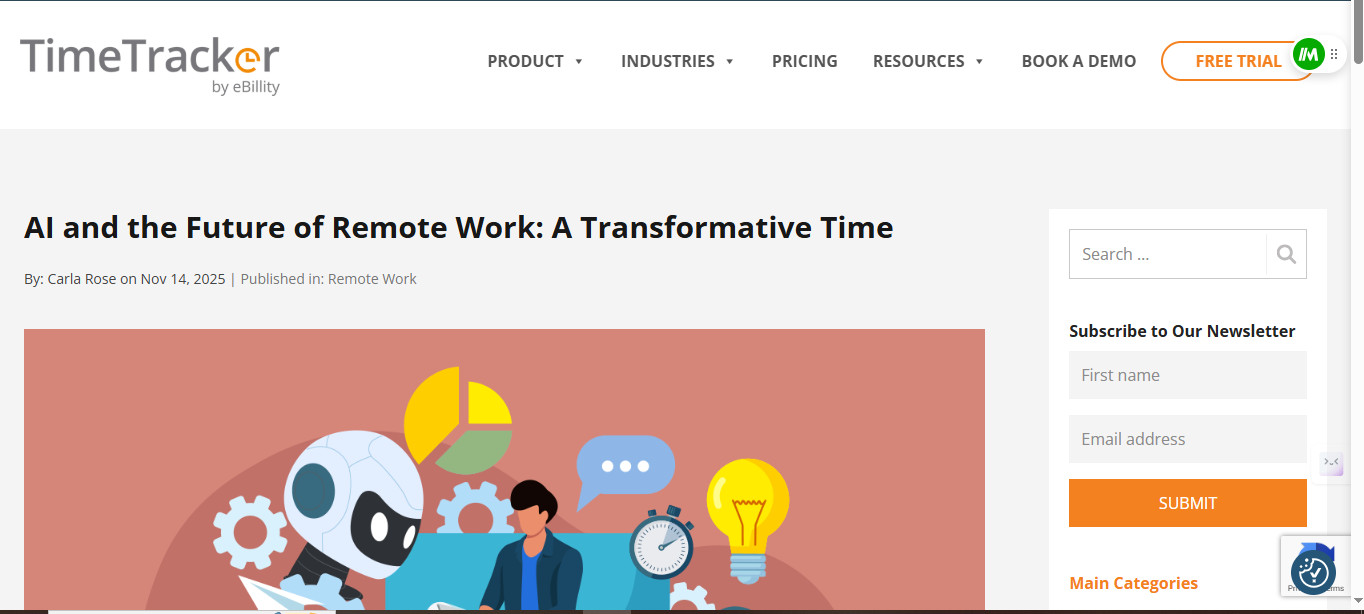
Remote workers win big—AI tools like Otter.ai transcribe meetings instantly. Example: Abuja freelancer boosts output 2x without leaving home.
My Personal Experience With the AI Revolution
How AI Changed My Daily Workflow as a Content Strategist
As Dayo Ogunbiyi in Abuja, I used to spend 4 hours researching. Now, Perplexity AI cuts it to 30 minutes. My output? Doubled.
The Wake-Up Call: My First AI Job Displacement Scare
In 2024, a client ditched me for AI-generated copy. Panic hit—I pivoted to AI-human hybrid services. Revenue up 150%.
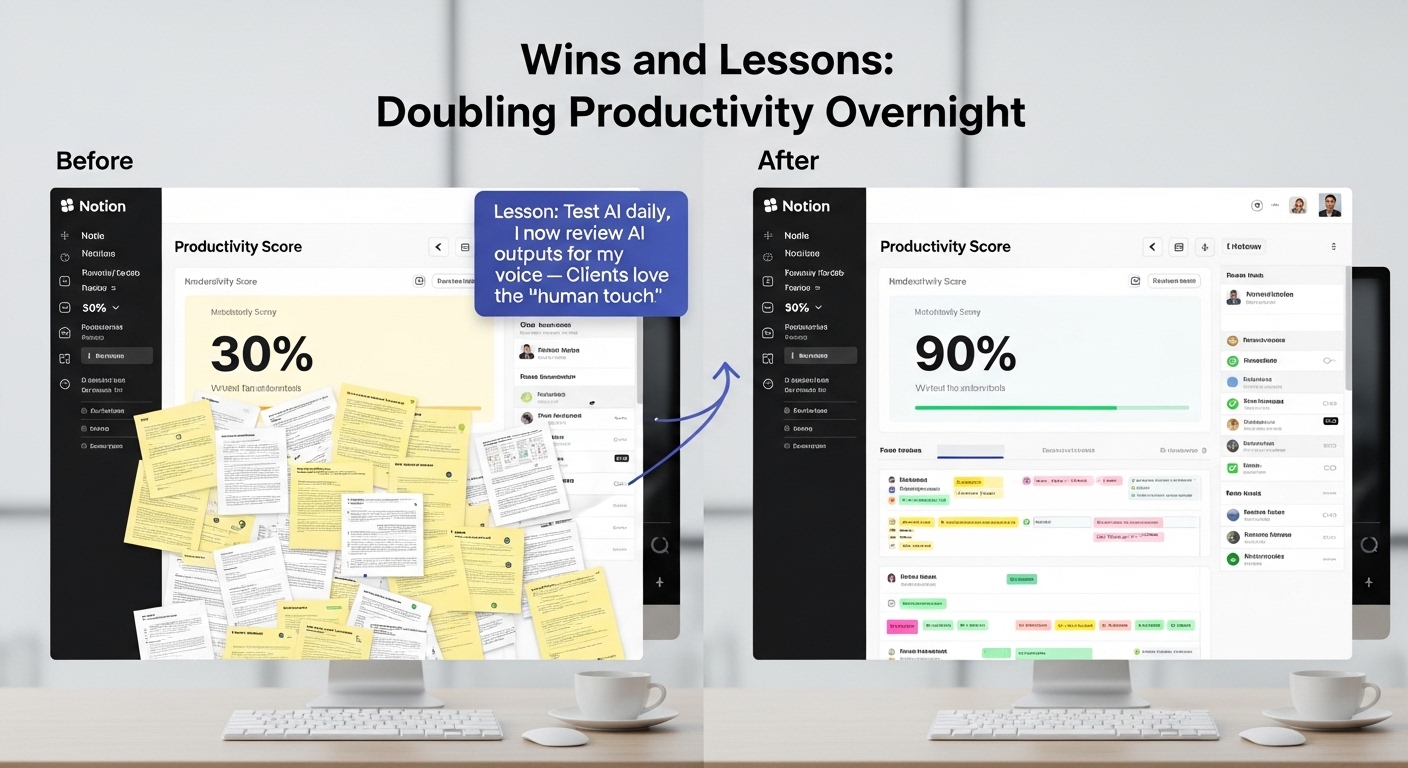
Wins and Lessons: Doubling Productivity Overnight
Lesson: Test AI daily. I now review AI outputs for my voice—clients love the “human touch.”
Data-Backed Insights: Stats on the AI Revolution’s Impact
2026 Projections: Job Gains vs. Losses (World Economic Forum data)
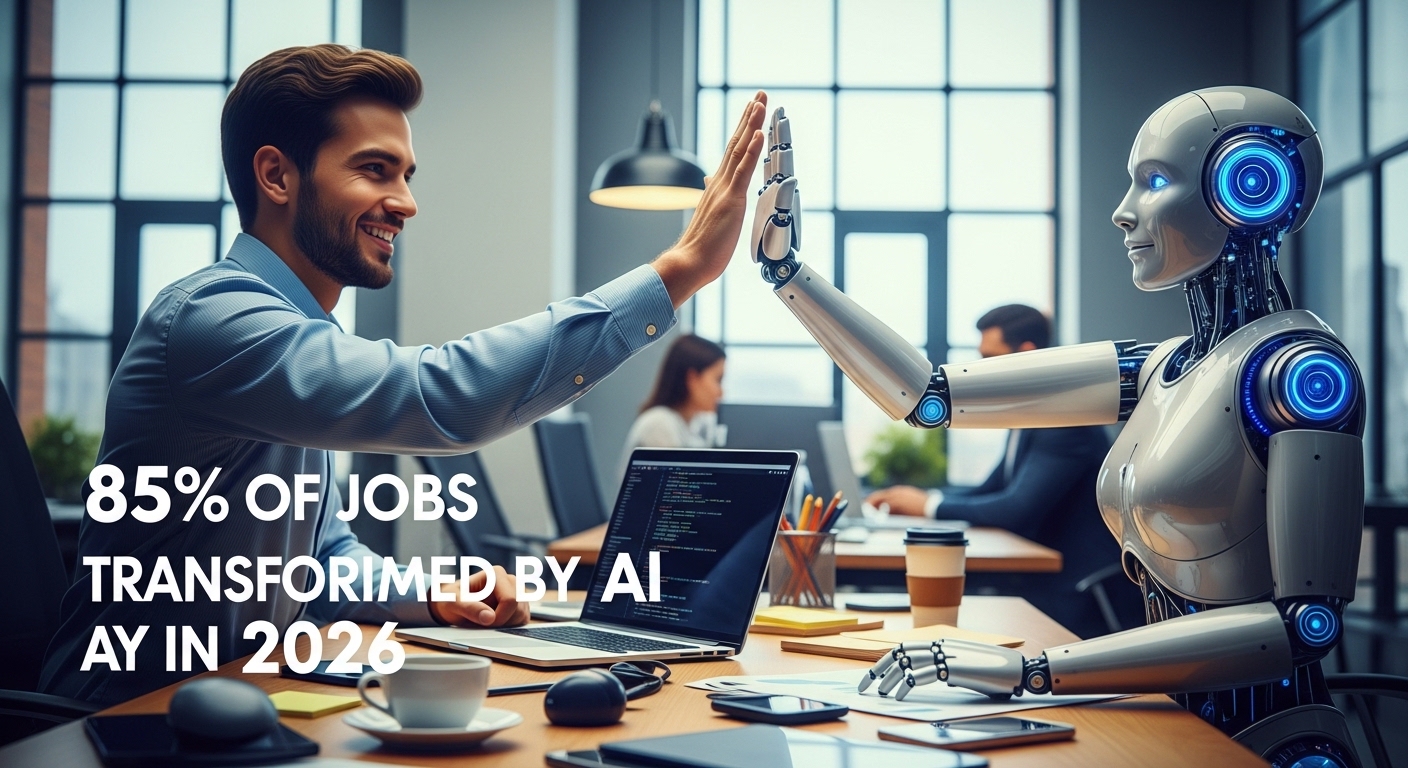
97 million new AI jobs by 2026, but 85 million lost. Net win for adapters.
Industry Breakdown: AI Revolution Winners (Healthcare, Tech) and Losers (Admin Roles)
Healthcare: AI diagnostics save lives. Admins? Typing gigs vanish.
Productivity Boost: 40% Gains from AI Tools (Forrester Research)
Example: Salesforce users see 35% faster sales cycles.
Pros & Cons of Embracing the AI Revolution
| Pros | Cons |
| 40% productivity jump – Finish work faster. | Job insecurity for routine roles. |
| Creative freedom – AI handles grunt work. | Learning curve for non-techies. |
| New roles like “AI prompt engineer.” | Ethical risks (AI bias). |
Example: A teacher uses AI for grading (pro), but worries about cheating (con).
AI Revolution vs. Past Tech Shifts: What’s Different This Time?
AI Revolution vs. Internet Boom (1990s)
Internet created e-commerce; AI creates “augmented workers.”
AI Revolution vs. Automation Wave (2010s)
Robots took factory jobs; AI takes white-collar thinking tasks.
Why 2026 Feels Urgent: Speed and Scale Comparison
AI evolves 10x faster—ChatGPT went viral in months, not years.
Common Mistakes Beginners Make in the AI Revolution
- Ignoring upskilling: Sticking to Excel? AI spreadsheets like Notion AI do it better.
- Over-relying on AI: Freelancer Sarah’s unedited AI blog bombed—clients spotted the robotic tone.
- Neglecting soft skills: AI can’t empathize; build relationships.
- Hype-chasing: Buying pricey tools without free trials.
Real scenario: Abuja accountant ignored AI invoicing—lost clients to faster competitors.
Step-by-Step: Future-Proof Your Career Amid the AI Revolution
- Audit your job: List tasks. Which can AI do? (Tool: Free ChatGPT prompt: “Analyze my role: [paste duties].”)
- Learn 3 tools in a week: Day 1: ChatGPT. Day 2: Canva Magic Studio. Day 3: Zapier basics.
- Integrate AI:
- Open Notion.
- Type “/AI” for summaries.
- Review/edit.
[Screenshot series placeholder.]
- Build your brand: Update LinkedIn with “AI-savvy strategist.”
- Network: Join Abuja AI meetups or Reddit’s r/MachineLearning.
Example: Beginner marketer followed this—landed freelance gig in 2 weeks.
Real-World Case Studies: Companies Thriving in the AI Revolution
Case Study 1: How Duolingo Used AI to Cut Costs by 30%
AI personalized lessons; users hooked, revenue soared.
Case Study 2: IBM’s AI Reskilling Program Success
Trained 100k workers—80% promoted.
Mini Case: Nigerian Firm Automating with Local AI Tools
Lagos startup uses Termii AI for customer service—response time from hours to seconds.
Expert Tips That Actually Work for Navigating the AI Revolution
- Prompt engineering hack: “Act as a [expert], explain [topic] like I’m 5, then advanced.” Example: Turned my weak drafts pro.
- Hybrid teams: Assign AI grunt work, you strategize. Boost: 50%.
- Daily habit: 15-min AI brainstorming session.
- Job contract tip: Add “AI tool provision” clause.
[Skimmable icons placeholder.]
Tools I Personally Recommend for the AI Revolution
Free Tools: ChatGPT, Google Gemini for Beginners
ChatGPT for writing; Gemini for research.
Paid Powerhouses: Jasper vs. Copy.ai Comparison
| Feature | Jasper | Copy.ai |
| Price | $49/mo | $36/mo |
| Best for | Long-form | Social |
| My pick | Jasper for blogs |
Workflow Integrations: Zapier + Notion AI Buyer’s Guide
Start free; scale to pro ($20/mo). Example: Auto-post AI content.
Troubleshooting the AI Revolution: FAQs
- Will the AI revolution eliminate my job in 2026? No—adapters thrive. Focus on oversight roles.
- How do I start with AI if I’m a complete beginner? Free ChatGPT tutorial: 10 mins/day.
- What’s the difference between AI revolution and machine learning? ML is AI’s brain; revolution is widespread use.
- Long-tail: Preparing for the AI revolution in creative industries? Use AI for ideation, humans for polish.
- Can AI handle emotional intelligence tasks? Not yet—it’s your edge.
- How to spot fake AI job postings? Check for “no experience needed” red flags.
- AI revolution ethics: Bias and privacy concerns? Use tools like Hugging Face for fair models.
- Best certifications for the AI revolution job market? Google AI Essentials (free).
- Long-tail: Surviving the AI revolution as a freelancer? Niche in AI + your expertise.
- Measuring ROI on AI tools? Track time saved vs. cost.
- AI revolution in Nigeria: Local opportunities? Fintech like Paystack hiring AI talent.
- Future outlook: Post-2026 AI trends? Multimodal AI (text + video).
Key Takeaways: Thrive in the AI Revolution
- Upskill now: Free tools first.
- Blend AI + human strengths: Best results.
- Adapt fast: 2026 is launchpad.
Ready to Navigate the AI Revolution? Take Action Now
Subscribe for monthly 2026 updates. Drop your AI story in comments—what’s your first step?