Why 2026 Is the Best Time to Make Money Online in Australia

The 2026 digital economy has made it easier than ever for Australians to earn serious income from home, even if you’re starting from scratch. Nearly half of employed Australians now work from home at least some of the time, which means online earning is no longer “weird” — it’s normal. At the same time, the cost of living has climbed to an average of AUD 2,500–3,500 per month (excluding rent) for a single person, pushing more Aussies to look for flexible side income online.
This combination of high living costs, mature remote-work culture, and better online tools makes 2026 a uniquely powerful moment to build income streams from your laptop.arielle+3
Rise of Remote Income in Australia
- Around 46% of employed Australians now work from home at least some of the time, showing how accepted online work has become.[savesmart]
- Remote-friendly roles span finance, communications, admin, education, and creative industries, which all translate well into online freelancing and remote gigs.redsearch.com+1
- Global platforms let you earn in stronger currencies (USD, EUR) while spending in AUD, giving you more purchasing power when converted.
Real-life scenario: A Brisbane marketing assistant moves from a purely office role to a hybrid position, then starts freelancing social media services on the side, eventually matching their salary in 9–12 months.
Cost of Living Comparison: Why Extra Online Income Matters
- Average living costs for a single person (excluding rent) now sit around AUD 2,500–3,500 per month, up from AUD 2,000–3,000 just a year earlier.
- Median rent is projected to reach about AUD 685 per week in 2026, which can easily push monthly expenses over AUD 5,000 in major cities.
- Earning even AUD 500–1,000 extra per month online can be the difference between just surviving and actually saving or investing.
Product warning: If you rely only on a single salary in a high-rent city like Sydney, you may be more exposed to financial stress if your job hours are cut or your rent increases.
Target Audience Overview (Who This Guide Is For)
This 2026 guide is ideal if you are:
- An Australian student looking to earn online between classes.
- A 9–5 worker who wants a flexible side hustle to offset rising living costs.
- A stay-at-home parent needing location-independent income.
- A remote worker who wants to diversify beyond one employer.
Electric safety note (for gear): If you’re working long hours on a laptop and accessories, always use certified chargers and boards, avoid overloading power points, and follow official safety guidelines.
30/60/90 Day Earning Expectations (Realistic, Not Hype)
These are typical, not guaranteed, assuming you commit 1–3 hours per day:
- First 30 days:
- Learn basics, set up profiles, create accounts.
- Likely earnings: AUD 0–200, mostly from first small gigs or micro-tasks.
- Days 31–60:
- You refine one method (e.g., freelancing or affiliate marketing), improve your offers.
- Likely earnings: AUD 200–800 total, depending on effort and niche.
- Days 61–90:
- You start getting repeat clients or consistent traffic.
- Likely earnings: AUD 500–1,500+ per month, if you stay focused on one path and improve your skills.
Key Takeaway (Hook Section): 2026 is the sweet spot where remote work is normal, tools are cheap, and costs are high enough that building even one reliable online income stream can significantly improve your financial stability in Australia.arielle+2
What Does It Really Mean to “Make Money Online”?
Making money online simply means exchanging value over the internet and getting paid digitally (bank transfer, PayPal, Stripe, etc.). It can be active (you trade hours for money) or passive (you build assets that keep earning over time).
Definition: Active vs Passive Online Income
- Active income:
- You work, you get paid; you stop, income stops.
- Examples: freelancing, virtual assistance, remote jobs, teaching online.
- Passive income:
- You build something once and it continues to earn with minimal ongoing effort.
- Examples: digital products, affiliate websites, content that earns ad revenue, print-on-demand stores.
Real-life scenario: A Melbourne designer earns active income by selling custom logos on a freelancing platform, while also building a Canva template shop that slowly becomes a passive income stream.
How Australians Are Earning Online in 2026
Australians are monetising skills and platforms in several ways:
- Remote jobs in IT, marketing, customer support, and admin with Australian or overseas employers.roymorgan+1
- Freelancing in graphic design, copywriting, coding, bookkeeping, virtual assistance, and more.
- Content creation on YouTube, TikTok, Instagram, and blogs, monetised through ads and sponsorships.
- Selling digital products, online tutoring, and affiliate marketing for local and global brands.
Real Example Case Study (Structure)
- A Sydney office worker starts writing blog posts for overseas clients at AUD 30–40 per article, then raises rates to AUD 80–120.
- After 6–9 months, they replace one week of office work with freelance work, then transition fully online.
- Their income stabilises at AUD 5,000–7,000 per month, split between freelancing and a small affiliate site.
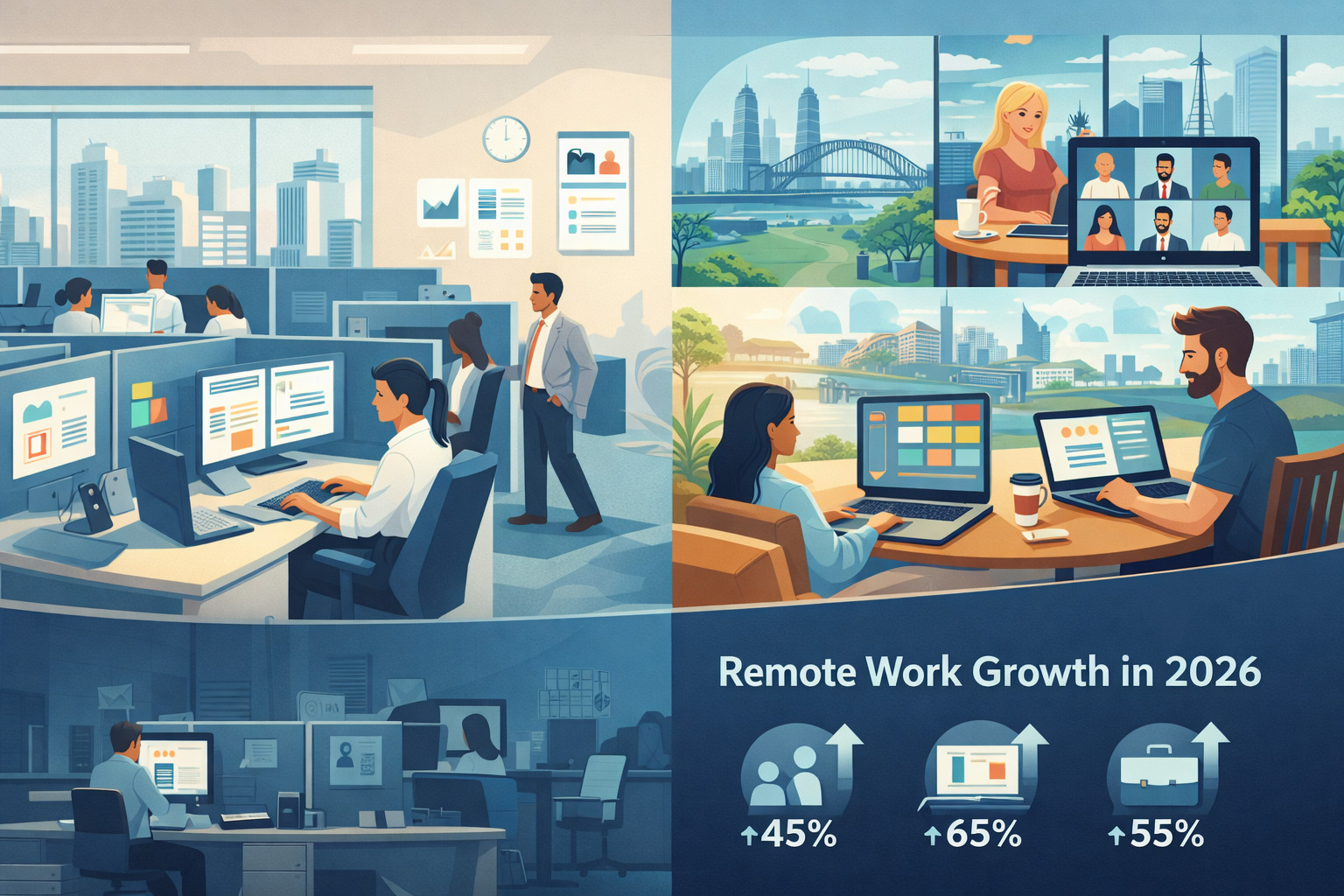
Key Takeaway (Definition Section): “Making money online” simply means using the internet as the channel for your work or assets, and in 2026 Australians are building both active and passive income streams across freelancing, remote jobs, content, and digital products.redsearch.com+1
10 Proven Ways to Make Money Online for Free in Australia
These ten methods require little to no upfront cash — just time, skills, and consistency.
1. Freelancing
Freelancing means offering services (writing, design, editing, coding, admin, etc.) directly to clients online.
How Freelancing Works
- You create a profile on platforms (e.g. marketplaces, job boards) and list your services.
- Clients post jobs or search for freelancers and pay per project or per hour.
- You deliver work via email, chat, or cloud tools.
Practical Steps for Beginners
- List 3 skills you already have (e.g. writing, Canva design, data entry).
- Create profiles on 1–2 platforms (e.g. general freelancing sites).
- Add 3–5 portfolio samples, even if they’re self-created demo projects.
- Apply to 5–10 relevant jobs per day for the first month.
Real-Life Example
A Perth university student offers simple blog posts for small businesses, starting at AUD 20 per article, and scales to AUD 80+ as reviews grow.
2. Affiliate Marketing
Affiliate marketing means earning a commission by promoting other companies’ products or services.
How It Works
- You join an affiliate program and get a unique tracking link.
- You recommend products via blog, social media, email list, or YouTube.
- When someone buys through your link, you earn a percentage.
Beginner Steps
- Pick a niche you understand (fitness, budgeting, travel, gaming).
- Sign up to 1–2 affiliate programs that serve Australians.
- Create helpful content that solves a problem (e.g. “best budget laptops for Australian students”).
- Place affiliate links naturally, with clear disclosure.
Real Example
A Gold Coast fitness creator posts home-workout videos and links to resistance bands and mats, earning small but consistent commissions.
3. Selling Digital Products
Digital products can include ebooks, templates, presets, printables, or courses.
What You Can Sell
- Budget templates for Australian cost-of-living planning.
- Canva templates for Instagram posts.
- Meal planners or study planners tailored to Aussie time zones.
How to Get Started
- Identify a recurring problem your audience has.
- Create a simple solution in a digital format (PDF, template, video).
- Sell via marketplaces or your own site (e.g. WordPress or Shopify).
- Promote through TikTok, Instagram, or Pinterest.
Example: A Melbourne teacher creates study planners for HSC and VCE students and sells them as printables.
4. Remote Jobs
Remote jobs are traditional employment roles performed entirely online.
Types of Remote Jobs
- Customer support representative.
- Marketing assistant or coordinator.
- Software developer, UX designer.
- Online tutor or language teacher.
How to Find Them
- Search job boards using filters like “remote” and “work from home”.
- Use LinkedIn and local job sites with remote tags.
Example: A Brisbane parent works as a part-time remote customer support agent for a global SaaS company.
5. Dropshipping
Dropshipping lets you sell products online without holding inventory.
How It Works
- You list products in your online store.
- When someone buys, the supplier ships directly to the customer.
- You earn the margin between your sale price and the supplier’s price.
Beginner Steps
- Pick a narrow niche (e.g. camping accessories, pet toys).
- Set up a store on Shopify or WordPress with eCommerce plugins.
- Connect to a trusted supplier with good shipping times to Australia.
- Drive traffic through ads, influencers, or content.
Product warning: Poor-quality suppliers can lead to refunds, complaints, and chargebacks, so always test samples first.
6. Content Creation
Content creation includes YouTube, TikTok, Instagram, podcasts, or blogs.
Ways to Monetise
- Ad revenue from videos or blog traffic.
- Brand sponsorships and partnerships.
- Affiliate links in descriptions or posts.
7. Print on Demand
Print on demand (POD) lets you sell custom designs on t-shirts, mugs, and posters, printed after each order.
How It Works
- You upload designs to a POD platform.
- Customers order through your store or marketplace.
- The POD partner handles printing and shipping.
Example: A Byron Bay artist sells surf-inspired prints and tees with Aussie beach themes.
8. Online Surveys and Micro-Tasks
Online surveys and micro-tasks are low-skill, low-pay options but useful to earn your first dollars online.
Practical Use
- Use them to earn initial AUD 20–100 to fund tools like a domain name or software.
- Avoid relying on them as a primary income source due to low hourly rates.
9. Virtual Assistance
Virtual assistants (VAs) handle admin, social media, email, or basic marketing tasks for businesses.
Typical Tasks
- Managing inboxes and calendars.
- Scheduling social media posts.
- Booking appointments and simple research.
Example: A Perth VA offers 10 hours per week to a coaching business and scales to multiple clients, reaching AUD 3,000–4,000/month.
10. Selling Stock Photos
If you enjoy photography, you can upload images to stock libraries and earn royalties.
What Sells Well
- Australian cityscapes and beaches.
- Local lifestyle shots (cafes, co-working spaces).
- Business and office scenes suitable for marketing.

Key Takeaway (10 Ways Section): You don’t need big capital to start — pick one of these ten free or low-cost methods, learn the basics, and commit to 90 days of consistent action instead of jumping between dozens of ideas.
Step-by-Step Beginner Roadmap (2026 Edition)
This roadmap keeps things simple so you avoid overwhelm.
Step 1: Choose One Method
- Review the ten methods above and pick one that matches your skills and interests.
- Avoid trying three or four at once; focus is your advantage as a beginner.
Step 2: Create Your Accounts and Setup
- Register on relevant platforms (freelancing sites, marketplaces, or job boards).
- Set up professional email, basic profile, and a simple bio focusing on who you help and how.
- Follow official security and safety guidelines for strong passwords and device protection
Step 3: Earn Your First AUD 100
- For freelancing: apply for small, quick jobs that you can over-deliver on.
- For affiliate marketing: publish a helpful comparison post or video and share it in relevant groups.
- For digital products: launch a simple starter product at a low price (e.g. AUD 7–15).
Step 4: Scale to AUD 1,000/Month
- Raise your prices in small increments as your reviews grow.
- Systemise what works (e.g. use templates for proposals, outlines, or responses).
- Double down on the one channel bringing most of your leads or traffic.
Step 5: Automate Income
- Use free or low-cost tools to automate posting, invoicing, and email sequences.
- For content or affiliate sites, build evergreen posts that continue to attract traffic.
- Gradually shift from purely active work to a mix of active + semi-passive income.
Key Takeaway (Roadmap Section): Pick one method, get your first AUD 100 as fast as possible, then refine and scale that same process until it consistently hits AUD 1,000+ per month before branching out.
Affiliate Marketing vs Freelancing (Comparison)
Both affiliate marketing and freelancing are popular beginner options, but they work very differently.
Comparison Table: Affiliate Marketing vs Freelancing
| Factor | Freelancing (Service-Based) | Affiliate Marketing (Content-Based) |
| Startup cost | Very low (time, basic tools) | Low (domain, hosting, or free social platforms) |
| Time to first income | Fast (often weeks if proactive) | Slower (months while building traffic) |
| Income potential | High but limited by hours worked | Very high if content scales globally |
| Stability | More predictable with repeat clients | Fluctuates with traffic and algorithm changes |
| Skill requirement | Needs marketable skill (writing, design, etc.) | Needs content, SEO, or social media skills |
| Control | High (direct client relationships) | Medium (platform policies and algorithms) |
| Risk level | Lower; clients pay agreed rates | Higher; earnings depend on conversion rates and traffic |
| Best for | People who want fast, active income | People who like content and long-term assets |
Affiliate Marketing vs Freelancing: Key Differences
- Startup Cost: Freelancing usually only needs a laptop and internet, while affiliate marketing may require a website, email tools, or graphics.
- Time to Income: Freelancing can pay you within weeks; affiliate marketing can take 3–6+ months to grow.
- Income Potential: Both can become full-time, but affiliate marketing can grow into a business that earns even when you’re offline.
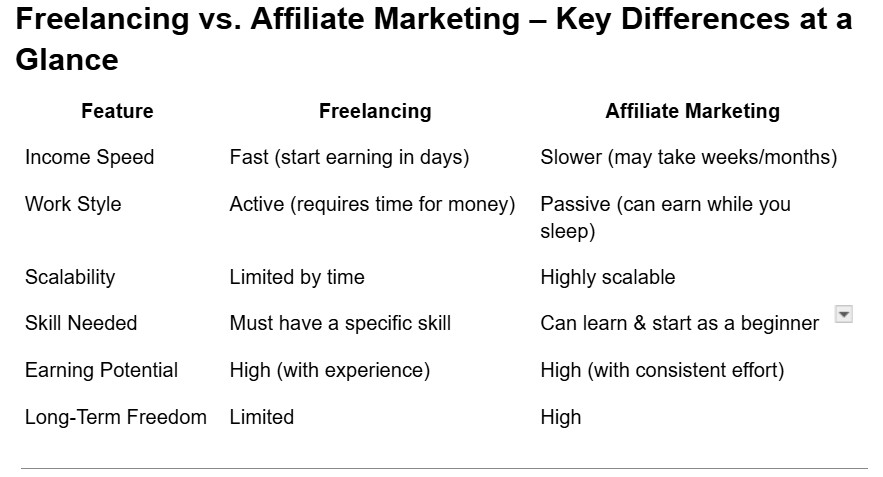
Key Takeaway (Comparison Section): If you want money quickly, freelancing is usually the better first step; if you’re playing the long game and love content, affiliate marketing can become more scalable over time.
Pros and Cons of Making Money Online in 2026
Pros
- Flexibility: Work from home, a co-working space, or while travelling domestically.
- Scalability: You can raise rates, add new services, or create digital products.
- Access to global clients: You’re not limited to Australian employers.
Cons
- Income Instability: Earnings can fluctuate month to month.
- Learning Curve: You must learn skills, tools, and platforms.
- Self-discipline required: No boss means you manage your own time.
Key Takeaway (Pros & Cons Section): Making money online gives you unmatched flexibility and growth potential, but you must accept a learning curve, income volatility, and the need for strong self-management.
Common Mistakes Beginners Make
Trying Too Many Methods at Once
- Spreading yourself across dropshipping, affiliate marketing, and freelancing at the same time usually means no method gets enough focus to succeed.
Expecting Instant Results
- Online income often takes weeks to months to build momentum; quitting after 2–3 weeks is one of the biggest pitfalls.
Ignoring Tax Requirements in Australia
- Online income is still taxable income and must be reported to the ATO.nanakaccountants+1
- This includes income from freelancing, digital products, affiliate commissions, and other business activities.
Product warning: Failing to track income and expenses properly can lead to unexpected tax bills or penalties later.nanakaccountants+1
Key Takeaway (Mistakes Section): Most beginners fail from lack of focus and patience, not from lack of opportunity; learn the basics of tax, stick to one method, and give it enough time to work.nanakaccountants+1
Expert Tips That Actually Work in 2026
Focus on High-Income Skills
- Skills like copywriting, paid ads, SEO, design, programming, and video editing can command higher rates, especially from international clients.
Use AI Smartly (Not as a Crutch)
- Use AI tools to speed up research, outlines, and drafts, but always add your own voice and expertise.
- Clients and audiences can tell the difference between generic and human content.
Build an Email List Early
- Email lists give you direct access to your audience, regardless of algorithm changes.
- Offer a free resource (checklist, mini-guide) in exchange for email sign-ups.
Track KPIs (Key Performance Indicators)
- For freelancing: number of pitches sent, responses, conversion rate, average project value.
- For content: page views, watch time, click-through rate, and opt-in rate.
Key Takeaway (Expert Tips Section): Treat your online income like a real business: build rare skills, leverage AI wisely, grow an email list, and track numbers so you know what actually moves the needle.
Tools Recommended (Beginner-Friendly Stack)
Canva
- Use Canva to create thumbnails, social posts, lead magnets, and simple logos.
- Example: A VA can offer “Canva social post packs” as an upsell to clients.
WordPress vs Shopify
- WordPress:
- Best for blogs, affiliate sites, and content-heavy projects.
- Highly customisable, massive plugin ecosystem.
- Shopify:
- Best for eCommerce and dropshipping.
- Built-in payment and inventory tools.
ALSO READ: Beginning Your Affiliate Marketing Journey: A Comprehensive Guide for Beginners
Email Tools
- Use beginner-friendly email tools to create newsletters and simple automations.
- Example: A blogger sets up a weekly “Money Tips for Aussies” newsletter and promotes affiliate products.
Payment Processors
- Use secure payment processors for invoices and online sales.
- Always check fees, currency conversion, and withdrawal times before choosing.
Electric safety note: When using multiple devices, monitors, and chargers in your home office, ensure your power boards are compliant with Australian standards and avoid overloading circuits.
Key Takeaway (Tools Section): Start with a simple stack: Canva for visuals, WordPress or Shopify for your home base, one email tool to own your audience, and a reliable payment processor to get paid smoothly.
Data-Backed Insights (Stats Placeholder Section)
- Remote work has become a permanent feature of Australia’s employment landscape, with nearly half of workers doing at least some work from home.
- Living costs have increased year-on-year, especially in rent and groceries, therefore making side income more important for financial security.upmove.com+1
- Tax brackets for 2025–26 highlight the importance of optimising deductions and tracking business expenses when your online income grows.
Furthermore: The Ultimate Beginner’s Guide to Affiliate Marketing: How to Start Earning Passive Income Online
Key Takeaway (Data Section): The numbers are clear: more Australians work online, living costs are rising, and online income—managed correctly for tax—can significantly improve your financial resilience.edvisehub+2
Buyer’s Guide: Gear and Budget for Online Income
Laptop Requirements
- Aim for a laptop with:
- Reliable processor (for multitasking).
- At least 8–16GB RAM for smooth work, especially if you edit video or run multiple tools.
- Safe, certified chargers and surge-protected power boards.
Free vs Paid Tools
- Start free where possible (Canva free, basic email tools, free themes).
- Upgrade only when:
- A paid plan clearly saves you time.
- You can pay for it from online earnings, not debt.
Budget Planning
Set a monthly “online business budget” (e.g. AUD 50–150) for:
-
- Domain and hosting.
- Essential software.
- Occasional ads or design help.
Product Scoring Table (Example: Entry-Level Laptop for Online Work)
| Product Type | Performance | Features | Durability | Price | Safety |
| Budget laptop A | 7/10 | 7/10 | 6/10 | 9/10 | 8/10 |
| Mid-range laptop B | 9/10 | 8/10 | 8/10 | 7/10 | 9/10 |
| Ultrabook C | 8/10 | 9/10 | 9/10 | 6/10 | 9/10 |
Example usage:
- A freelancer might choose Mid-range laptop B for better performance when running multiple apps.
- A student might start with Budget laptop A to keep costs low while still meeting basic requirements.
Key Takeaway (Product Scoring Section however): Choose gear based on reliability and safety first, not just price; a mid-range, well-built laptop can pay for itself quickly when you use it to generate online income.
Key Takeaways (Summary)
- Focus on one online income stream at a time.
- Be consistent over 90 days before judging results.
- Reinvest part of your profits into skills and better tools.
[MY BEFORE/AFTER IMAGE]
Key Takeaway (Key Takeaways Section): If you pick one method, commit for 90 days, and reinvest in your skills and tools, 2026 can be the year you build a sustainable, flexible online income in Australia.
FAQs : Making Money Online in Australia
- Is it really possible to make money online in Australia in 2026?
Yes, millions of Australians already work from home or earn side income online through freelancing, remote jobs, content, and small online businesses.redsearch.com+1 - How much money can I realistically make online per month?
Beginners commonly see AUD 200–1,000/month within a few months if they stay consistent, while experienced freelancers and creators can exceed AUD 5,000/month. - Which method is best for absolute beginners?
Freelancing and virtual assistance are often the fastest for beginners because you can use skills you already have (writing, admin, design) and start earning within weeks. - Do I need an ABN to start?
If you’re operating as a business or freelancer, you’ll typically need an ABN and must report your income to the ATO; check official guidance or an accountant for your situation.nanakaccountants+1 - How do I avoid online scams and fake opportunities?
Avoid any offer that promises guaranteed high income, asks for large upfront payments, or pressures you to recruit others; legitimate work usually pays for actual services or results. - How do I handle tax on my online income?
Keep records of all income and expenses, and declare your net income in your tax return; online earnings are generally taxable like any other business income.ato+1 - Can I make money online with just my phone?
Yes, for instance you can start with tasks like social media management, content creation, or simple design using mobile apps, though a laptop will eventually make work easier and more professional. - How long does it take to get my first client or sale?
With consistent effort (e.g. 5–10 pitches per day), many beginners land their first freelance client or small sale within 2–6 weeks, but this varies by niche and skill. - Are online surveys worth my time in Australia?
Surveys are usually best for small extra pocket money or funding your first tools; they are not a strong long-term earning method compared to freelancing or building a business. - What is the single biggest success factor in making money online?
The biggest factor is consistent focused action—choosing one method, improving your skills, and showing up daily for at least 90 days instead of constantly chasing the next shiny idea.
- Choose one method from this guide (freelancing, affiliate marketing, digital products, etc.).
- Set a clear 30-day target (e.g. “earn my first AUD 100 online” or “send 100 pitches”).
- Bookmark this guide,and subscribe to stay updated on new 2026 strategies and tools for making money online in Australia.
Now, please answer these 5 questions so we can replace the placeholders with your real experience and screenshots:
- What was the first online method you used to make money, and how long did it take to get your first payment?
- Can you describe your biggest early mistake when trying to make money online and what you learned from it?
- Do you have a before/after story (income, lifestyle, or mindset) that shows how online income changed your situation?
- Have you tested any specific brand, platform, or tool (e.g. a laptop model, hosting company, or payment processor) that you strongly recommend—or warn people about—and why?
- What is your number one expert tip you’d give to an Australian beginner starting today in 2026?